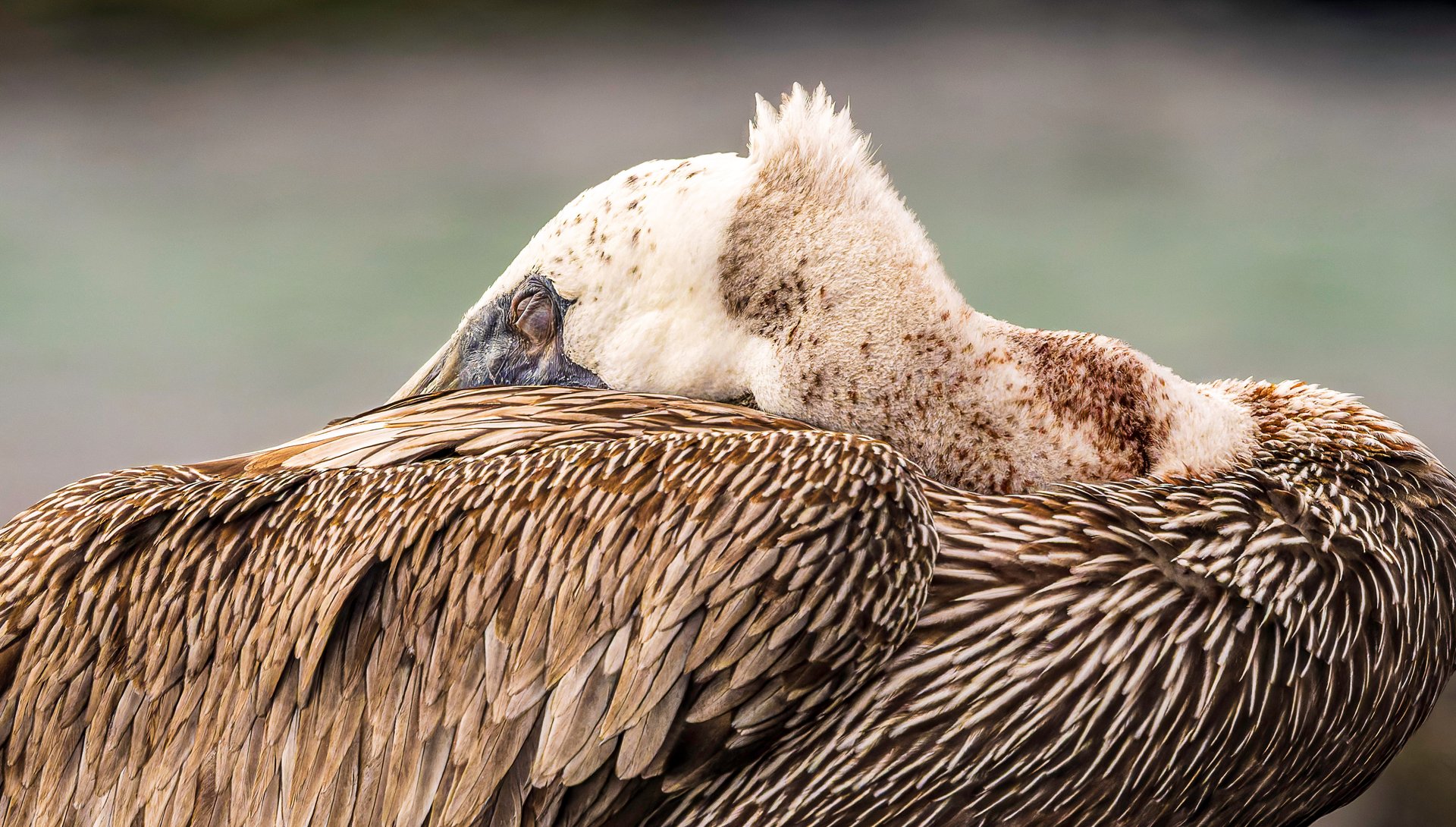
Brown Pelican: Ruffled and at Peace

Galápagos brown pelican, sleeping pelican close-up, Galápagos wildlife photography, pelican feather detail macro, Ecuador birdlife, seabird portrait, Pelecanus occidentalis urinator, Galápagos Islands nature photography, endemic pelican subspecies, bird resting posture photography

Brown Pelican: Ruffled and at Peace

LIFE

The Galápagos brown pelican is larger and darker than its North American cousins, having adapted over generations of isolation.Pelicans are among the oldest bird groups alive — fossil evidence suggests pelican-like birds existed over 30 million years ago, largely unchanged in basic form. Brown pelicans are the only pelican species that plunge-dives from the air (often 20–60 feet up) to catch fish, folding their wings and hitting the water like a torpedo. Air sacs beneath their skin cushion the impact. A pelican's gular pouch can hold up to 3 gallons of water — roughly three times the capacity of its stomach. After a dive, it drains the water before swallowing the fish. The tufted, sometimes wild-looking crest feathers (visible in this photo) are often more pronounced during breeding season, when pelicans also develop brighter pouch and neck coloring. Pelicans often tuck their heads back against their bodies (as seen here) both to sleep and to regulate body temperature, since it reduces heat loss through the bill and neck. Brown pelicans were nearly wiped out in the mid-20th century due to DDT pesticide poisoning, which thinned their eggshells. They were removed from the U.S. Endangered Species list in 2009 after a major recovery.

Artist description

The Galápagos brown pelican is larger and darker than its North American cousins, having adapted over generations of isolation.Pelicans are among the oldest bird groups alive — fossil evidence suggests pelican-like birds existed over 30 million years ago, largely unchanged in basic form. Brown pelicans are the only pelican species that plunge-dives from the air (often 20–60 feet up) to catch fish, folding their wings and hitting the water like a torpedo. Air sacs beneath their skin cushion the impact. A pelican's gular pouch can hold up to 3 gallons of water — roughly three times the capacity of its stomach. After a dive, it drains the water before swallowing the fish. The tufted, sometimes wild-looking crest feathers (visible in this photo) are often more pronounced during breeding season, when pelicans also develop brighter pouch and neck coloring. Pelicans often tuck their heads back against their bodies (as seen here) both to sleep and to regulate body temperature, since it reduces heat loss through the bill and neck. Brown pelicans were nearly wiped out in the mid-20th century due to DDT pesticide poisoning, which thinned their eggshells. They were removed from the U.S. Endangered Species list in 2009 after a major recovery.