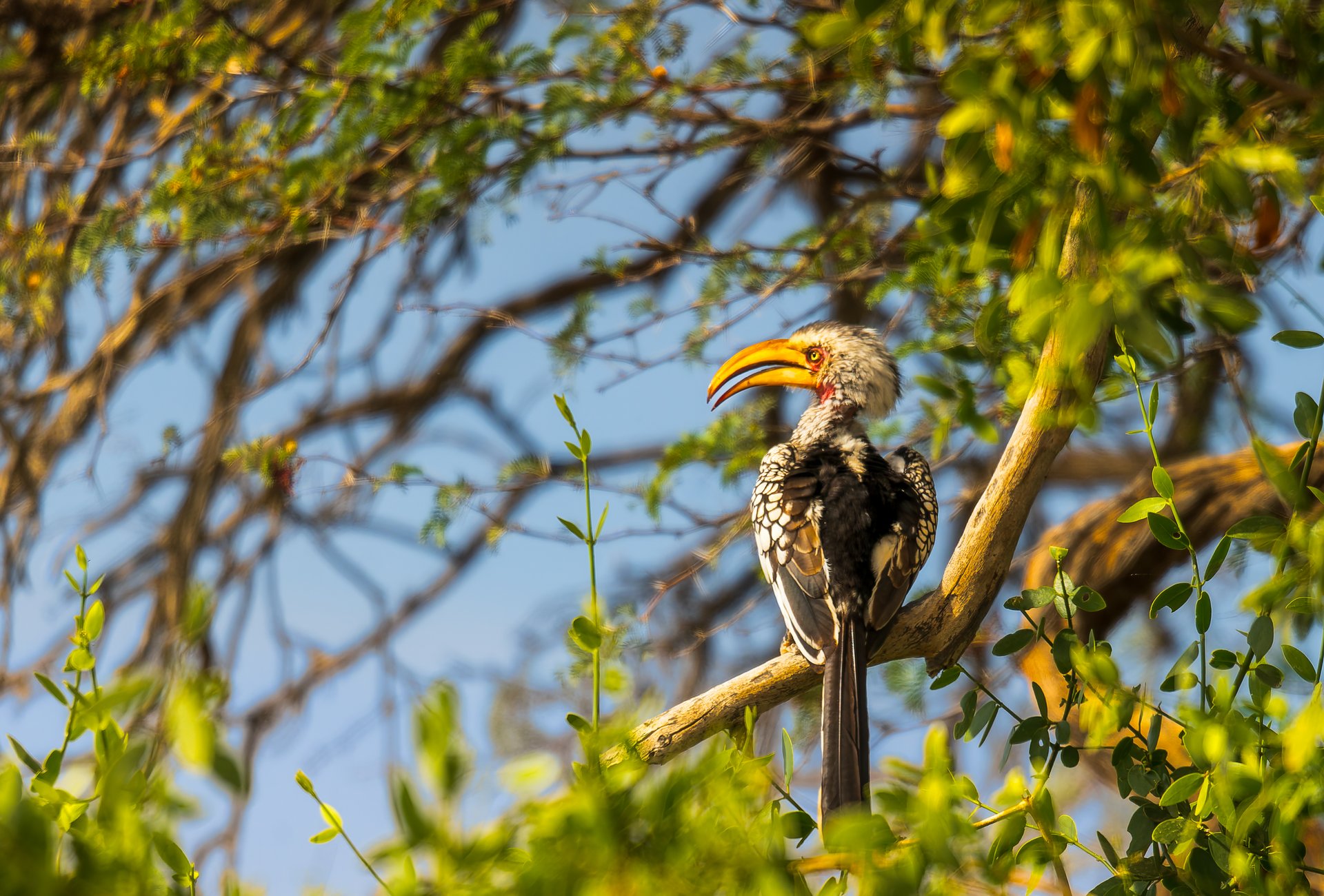
Southern Yellow-billed Hornbill/ Flying Banana (Tockus leucomelas)
LIFE
The Southern Yellow-billed Hornbill (Tockus leucomelas), often called the "Flying Banana" because of its massive, curved yellow beak, is one of the most charismatic characters of the African savanna. Their breeding habits are among the most unusual in the bird world. To protect the family from predators like snakes and monitors, the female enters a hole in a tree and, with the male's help, seals herself inside using a mixture of mud, droppings, and fruit pulp. She leaves only a narrow vertical slit open. For several weeks, the male is the sole provider, passing food through the tiny crack to the female and the growing chicks. The female stays inside until the chicks are half-grown, at which point she breaks out, reseals the hole, and joins the male in foraging. In a remarkable display of inter-species cooperation, these hornbills often form mutualistic hunting parties with Dwarf Mongooses. The hornbills act as "sentinels," perched high up to watch for raptors. In exchange, the mongooses stir up insects and lizards from the grass as they forage, providing the hornbill with an easy feast. Hornbills will actually "call" the mongooses to wake them up or alert them when it's time to start the hunt. Despite its heavy appearance, the beak is surprisingly light because it is filled with a honeycomb-like bone structure. It allows them to pluck tiny insects or seeds with the tip but also acts as a radiator with the large surface area of the beak helps the bird shed excess body heat in the African sun.