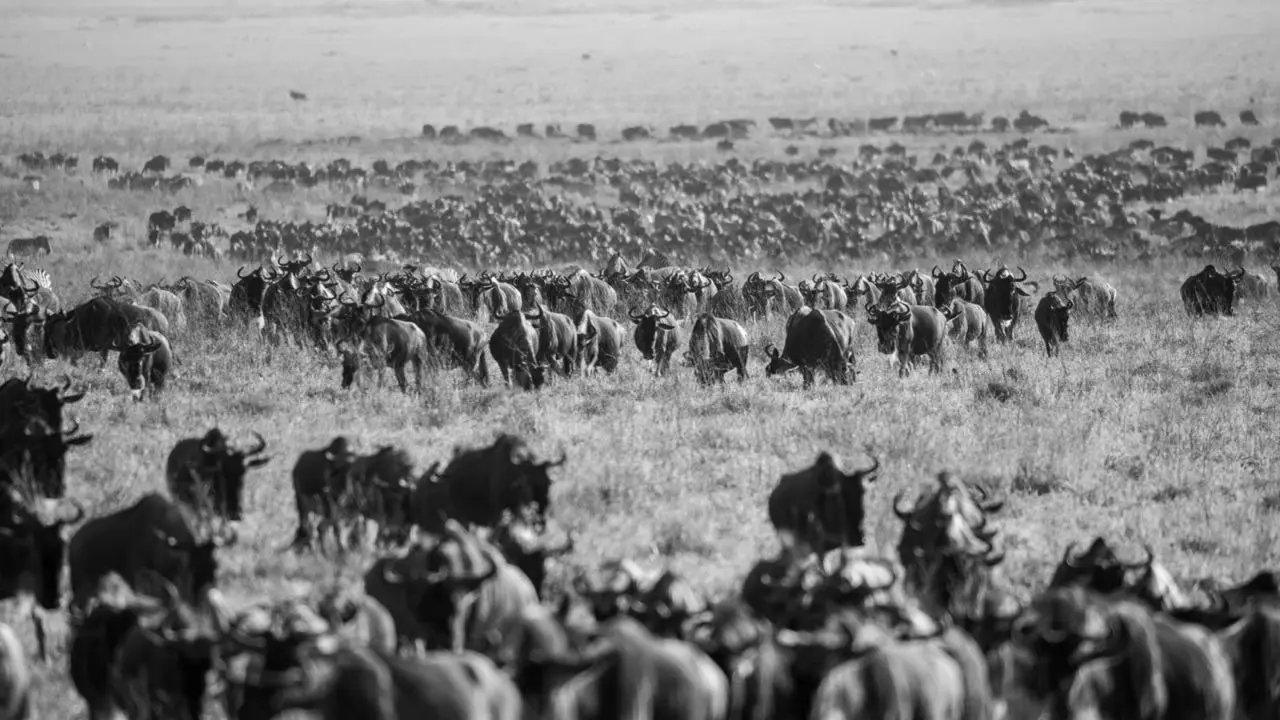
Wildebeest Herd
Wildlife
The African wildebeest, also known as the gnu, is a large, antelope-like herbivore found widely across East Africa, especially in the Serengeti–Mara ecosystem of Tanzania and Kenya. The dominant species in this region is the blue wildebeest, known for its distinctive sloped shoulders, curved horns, muscular build, and shaggy beard. In East Africa, wildebeest are best known for their role in the Great Migration, where over 1.5 million animals move in a massive, circular, seasonal migration between Tanzania’s Serengeti National Park and Kenya’s Maasai Mara, following seasonal rains and fresh grass. This movement is driven by the need for food and water, and involves dramatic river crossings (notably the Mara and Grumeti Rivers) where thousands may die due to predators and drowning. Wildebeest are highly social and typically move in large herds, often mixed with zebras and gazelles. Their breeding is synchronized, with most calves born within a 2–3 week period (around February in the southern Serengeti), providing safety in numbers. These animals play a vital ecological role by maintaining grasslands and serving as a primary food source for predators like lions, hyenas, and crocodiles.