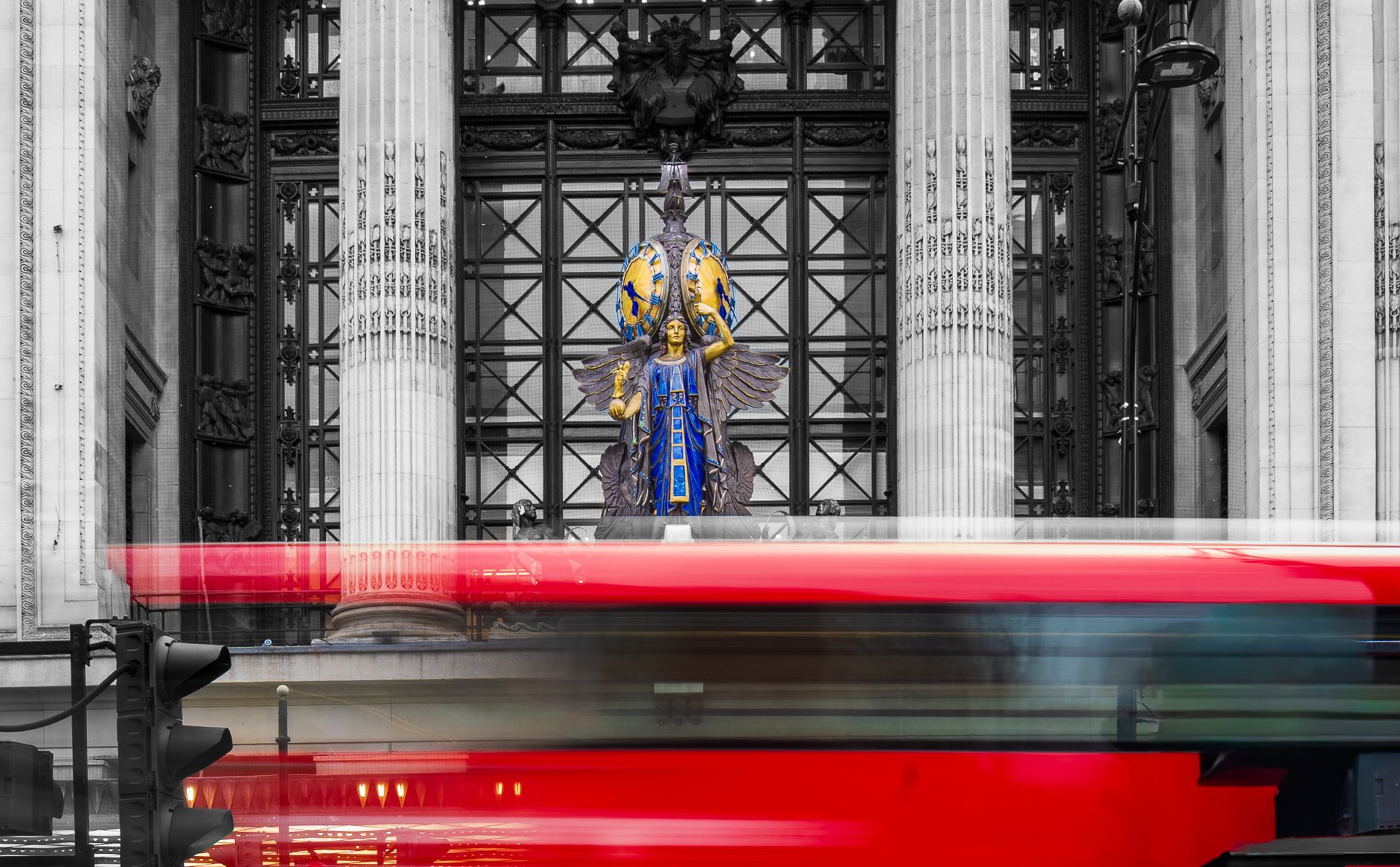
Queen of time
EARTH
There's a quiet philosophical argument running through this image, and it's built into the architecture of the frame itself. Two clocks, two timescales. The Queen of Time is, literally, a clock — Bayes designed her holding a sundial-like disc, and she has presided over that doorway since 1931. She is one kind of timekeeping: ceremonial, slow, civic. She measures time in decades and reigns. Below her, the bus is also a clock, of a different sort — the city's circulatory pulse, arriving and departing on the minute, measuring time in headways and timetables. London runs on both: the deep time of its institutions and the shallow, restless time of its traffic. Blue-and-gold is the palette of icons and altarpieces — Byzantine mosaics, illuminated manuscripts, Marian imagery. It's the color of things meant to last forever. Red, by contrast, is the color of warning lights, fire engines, urgency, now. London chose red for its buses precisely because red gets noticed and gets out of the way. So the image isn't just contrasting still and moving — it's contrasting two entirely different visual vocabularies. Eternity in blue and gold. The present tense in red. They share a frame but speak different languages.