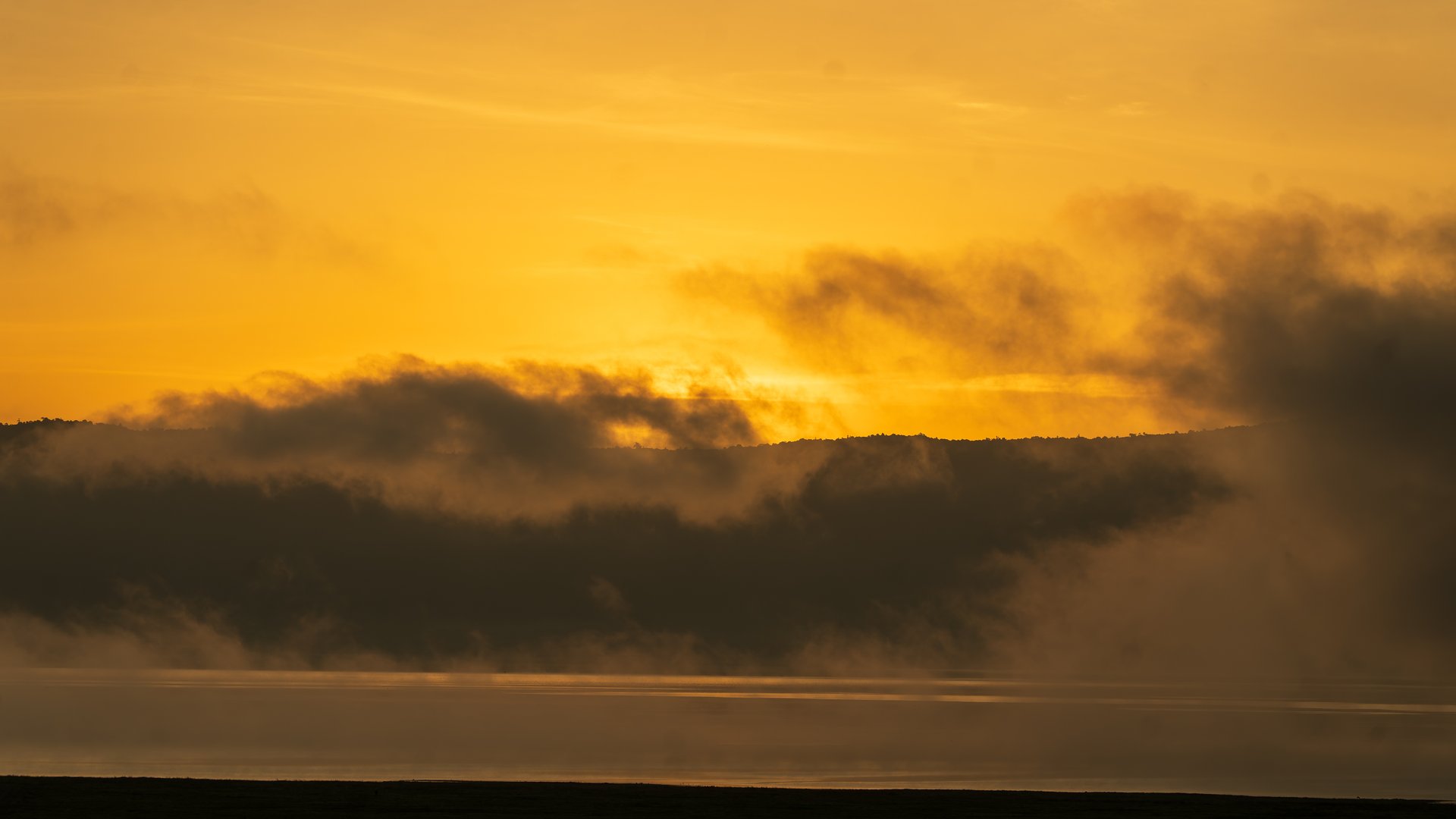
Ngorongoro Sunrise

Golden sunrise in Ngorongoro crater over misty mountains and calm water, creating a serene landscape.

Ngorongoro Sunrise

EARTH

Lake Magadi, also known by its Maasai name, Lake Makat is a shallow, alkaline "soda" lake that serves as the centerpiece of the Ngorongoro Crater floor in Tanzania. Lake Magadi was formed as a result of the same cataclysmic event that created the Ngorongoro Crater itself. Roughly two to three million years ago, a massive volcano—estimated to have been as tall as Mount Kilimanjaro—erupted and subsequently collapsed inward, creating the 610-meter-deep caldera. The lake is not fed by a major river; instead, it is sustained by rainwater and several underground springs, most notably the Ngoitokitok Spring on the eastern wall. Because the lake has no outlet, evaporation leads to high concentrations of sodium carbonate, giving it its "soda lake" status. During the dry season, the water recedes, often leaving behind shimmering white salt pans. The Maasai Heritage: The name "Makat" is the Maasai word for salt. For centuries, the Maasai have used the mineral-rich shores of the lake to provide essential salt licks for their cattle. While they no longer live on the crater floor, they still maintain the right to bring their livestock down to the water for grazing and salt. The lake’s high alkalinity fosters the growth of blue-green algae (Spirulina), which is the primary food source for thousands of Lesser Flamingos. On many days, the shoreline appears as a solid band of vibrant pink. The mineral salts also attract large herds of wildebeest, zebras, and elands, which use the lake as a natural salt lick. This high density of prey makes the lakeshore a frequent hunting ground for the crater’s famous population of golden-maned lions and spotted hyenas. The lake is a vital part of the Ngorongoro Conservation Area, which was carved out of the Serengeti National Park in 1959 to allow for the co-existence of wildlife and the Maasai. It was designated a UNESCO World Heritage site in 1979.

Artist description

Lake Magadi, also known by its Maasai name, Lake Makat is a shallow, alkaline "soda" lake that serves as the centerpiece of the Ngorongoro Crater floor in Tanzania. Lake Magadi was formed as a result of the same cataclysmic event that created the Ngorongoro Crater itself. Roughly two to three million years ago, a massive volcano—estimated to have been as tall as Mount Kilimanjaro—erupted and subsequently collapsed inward, creating the 610-meter-deep caldera. The lake is not fed by a major river; instead, it is sustained by rainwater and several underground springs, most notably the Ngoitokitok Spring on the eastern wall. Because the lake has no outlet, evaporation leads to high concentrations of sodium carbonate, giving it its "soda lake" status. During the dry season, the water recedes, often leaving behind shimmering white salt pans. The Maasai Heritage: The name "Makat" is the Maasai word for salt. For centuries, the Maasai have used the mineral-rich shores of the lake to provide essential salt licks for their cattle. While they no longer live on the crater floor, they still maintain the right to bring their livestock down to the water for grazing and salt. The lake’s high alkalinity fosters the growth of blue-green algae (Spirulina), which is the primary food source for thousands of Lesser Flamingos. On many days, the shoreline appears as a solid band of vibrant pink. The mineral salts also attract large herds of wildebeest, zebras, and elands, which use the lake as a natural salt lick. This high density of prey makes the lakeshore a frequent hunting ground for the crater’s famous population of golden-maned lions and spotted hyenas. The lake is a vital part of the Ngorongoro Conservation Area, which was carved out of the Serengeti National Park in 1959 to allow for the co-existence of wildlife and the Maasai. It was designated a UNESCO World Heritage site in 1979.