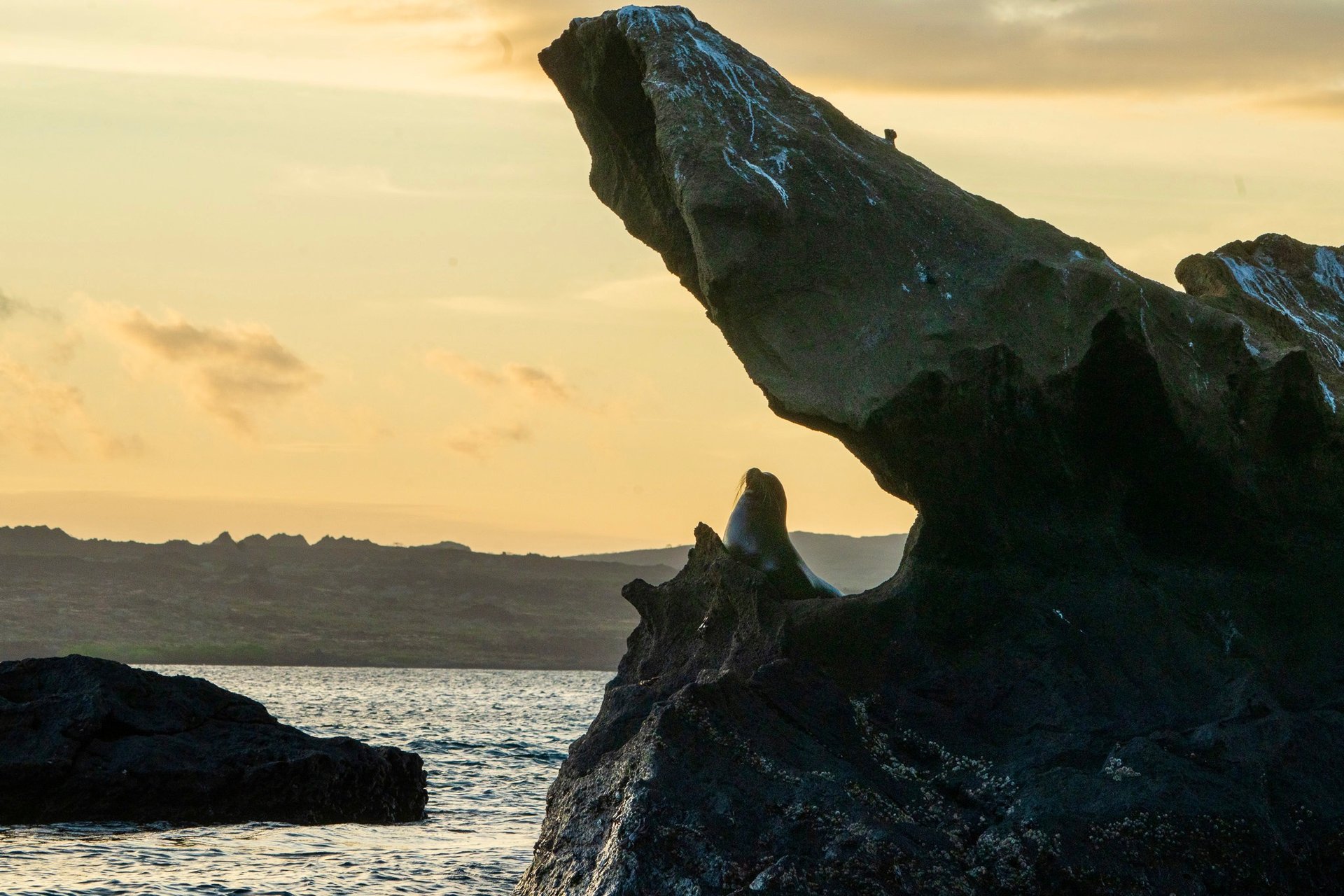
Guardian of the Lava Coast

Galápagos sea lion sunset silhouette, sea lion on lava rock, Zalophus wollebaeki, Galápagos rock arch, volcanic coastline Galápagos, Galápagos wildlife photography, Ecuador sunset landscape, sea lion silhouette photography, Galápagos Islands nature photography

Guardian of the Lava Coast

EARTH

The image captures both the geological drama and quiet wildlife moments the Galápagos is famous for. Photographed on a trip to the Galápagos Islands, this landscape shot captures a Galápagos sea lion perched on a jagged lava rock formation, silhouetted against a glowing golden sunset sky. A dramatic, overhanging volcanic arch looms above the sea lion, framing the scene and emphasizing the raw, sculptural terrain characteristic of the islands' coastline Despite their relaxed shoreline demeanor, Galápagos sea lions are highly skilled hunters, capable of diving over 600 feet and holding their breath for several minutes while chasing sardines and other schooling fish. Sea lions live in noisy, tight-knit colonies led by a dominant bull who fiercely defends his territory and harem — the deep barking calls heard on Galápagos beaches are part of this constant social negotiation. Because they rely heavily on cold, nutrient-rich waters for fish stocks, Galápagos sea lion populations are notably sensitive to El Niño events, which can cause sharp, temporary population declines.

Artist description

The image captures both the geological drama and quiet wildlife moments the Galápagos is famous for. Photographed on a trip to the Galápagos Islands, this landscape shot captures a Galápagos sea lion perched on a jagged lava rock formation, silhouetted against a glowing golden sunset sky. A dramatic, overhanging volcanic arch looms above the sea lion, framing the scene and emphasizing the raw, sculptural terrain characteristic of the islands' coastline Despite their relaxed shoreline demeanor, Galápagos sea lions are highly skilled hunters, capable of diving over 600 feet and holding their breath for several minutes while chasing sardines and other schooling fish. Sea lions live in noisy, tight-knit colonies led by a dominant bull who fiercely defends his territory and harem — the deep barking calls heard on Galápagos beaches are part of this constant social negotiation. Because they rely heavily on cold, nutrient-rich waters for fish stocks, Galápagos sea lion populations are notably sensitive to El Niño events, which can cause sharp, temporary population declines.