Canopy Cruisers
LIFE
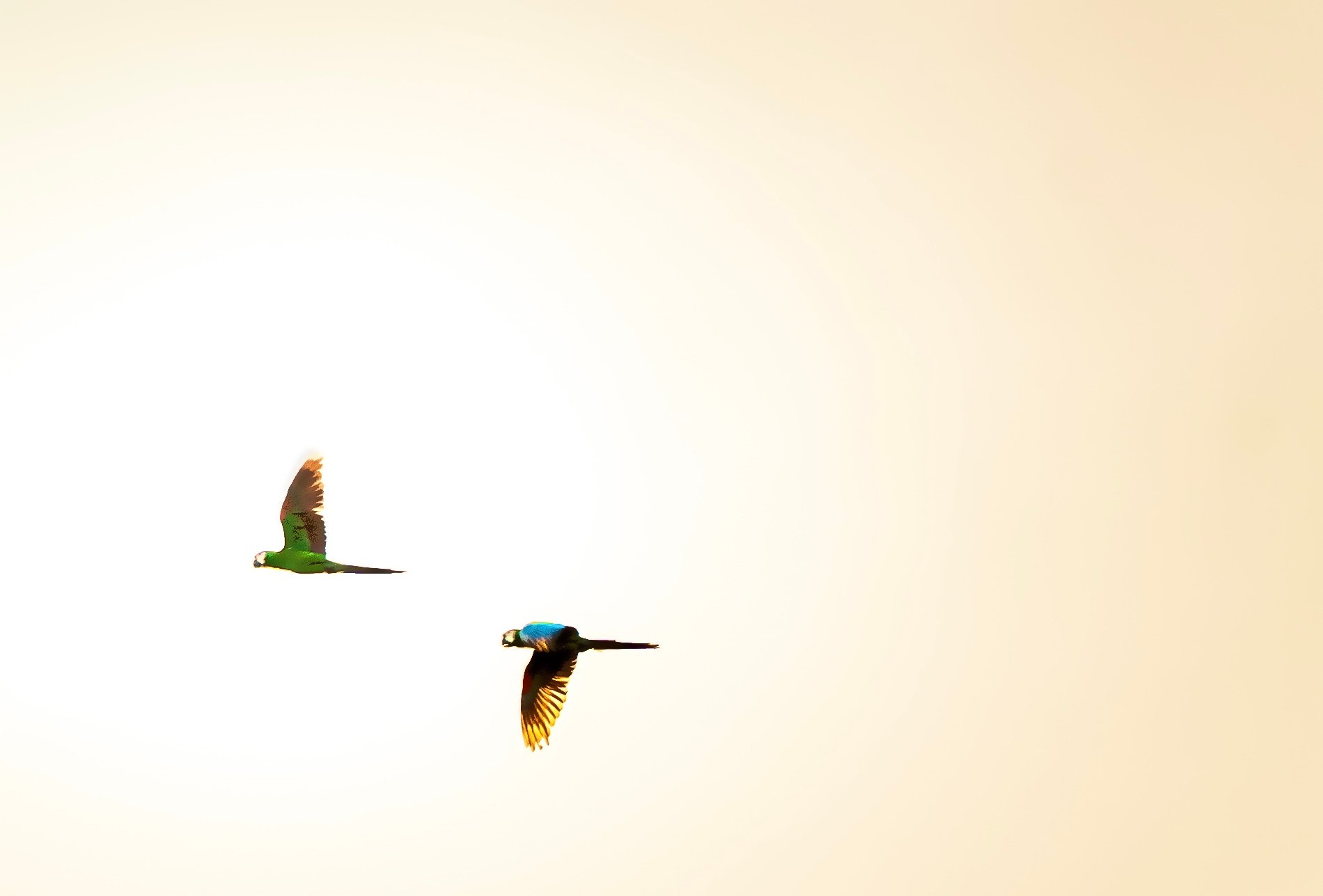
Captured deep in the Amazon rainforest, this dynamic flight shot shows two macaws — one displaying vivid green plumage with rust-toned wing feathers, the other a classic blue-and-gold macaw — soaring in tandem against a luminous, overexposed sky. The high-key lighting blows out the background into soft cream and white tones, throwing the birds' wing shapes and colors into sharp, graphic silhouette. The image captures a quintessential Amazon moment: macaws piercing the canopy light on their daily flight between feeding grounds. The Amazon rainforest is home to more macaw species than anywhere else on Earth, including scarlet, blue-and-gold, green-winged, and military macaws. Amazonian macaws famously gather in large, noisy flocks at riverbank clay licks (called collpas) to eat clay, which neutralizes toxins from the unripe fruits and seeds that make up much of their diet — a spectacle unique to the region. Macaws typically mate for life and are frequently seen flying in close pairs, much like the two birds captured here, often calling loudly to stay in contact through dense canopy. Macaw pairs and small flocks travel long distances each day between roosting sites and scattered fruiting trees, making them a common and beloved sight for anyone traveling the Amazon by river or canopy walkway. Macaws display problem-solving abilities and social intelligence rivaling primates, and several Amazonian species can learn to mimic dozens of sounds. The bright plumage of Amazon macaws helps with mate recognition and pair bonding, and — counterintuitively — provides camouflage against the dappled, ever-shifting light of the rainforest canopy.